Behind every lamp lies a story of materials, technique, and research. In the case of borosilicate glass, that story is even more distinctive: a process that demands specialized expertise, complete control over every stage of production, and an in-depth understanding of the material itself.
Cangini & Tucci was among the first companies to introduce borosilicate glass into the decorative lighting industry, choosing a material that remains at the heart of its manufacturing identity.
A decision that still reflects the company's design philosophy today: embracing technical complexity to achieve exceptional results in terms of lightness, durability, and lighting quality.
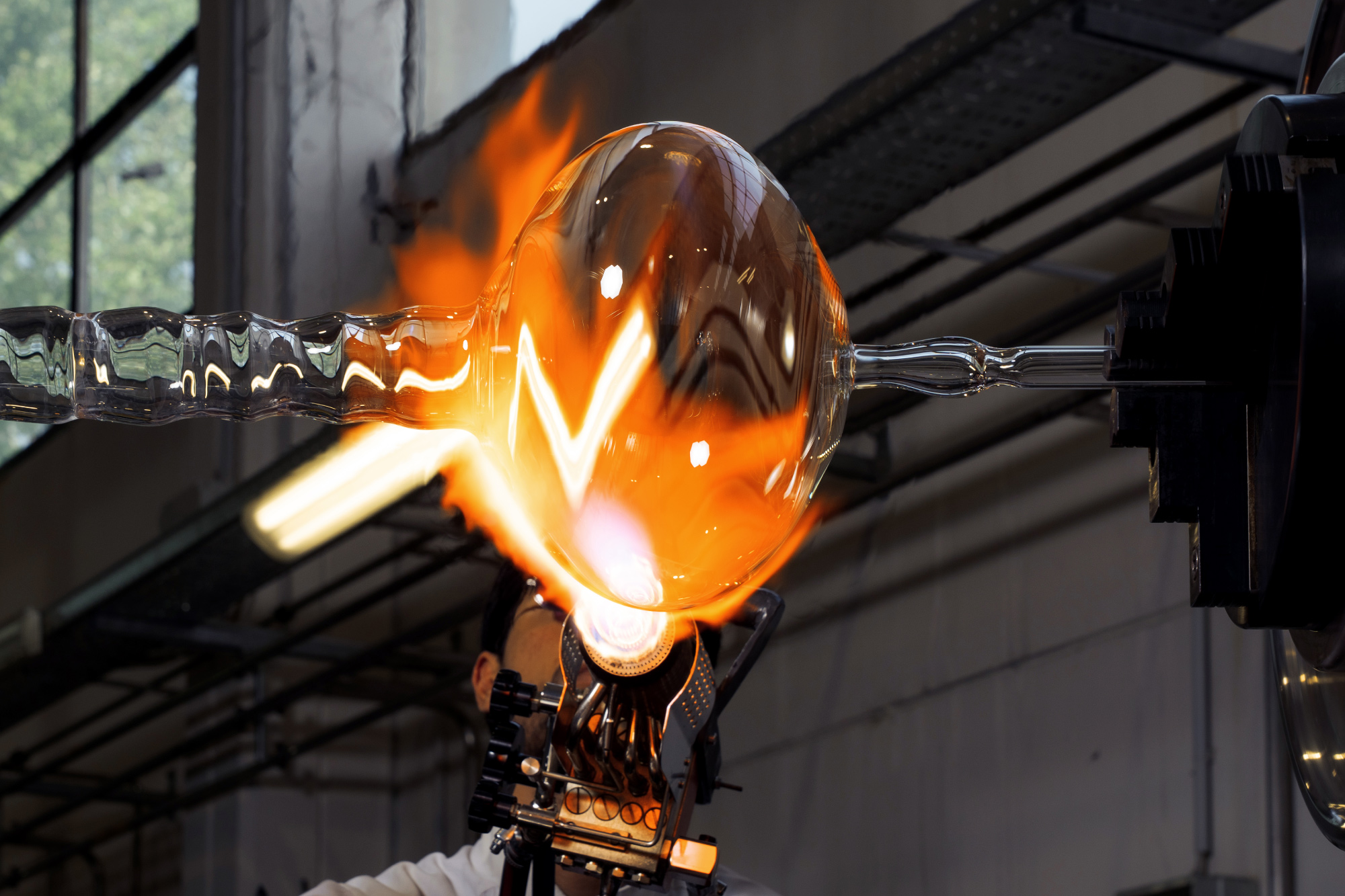
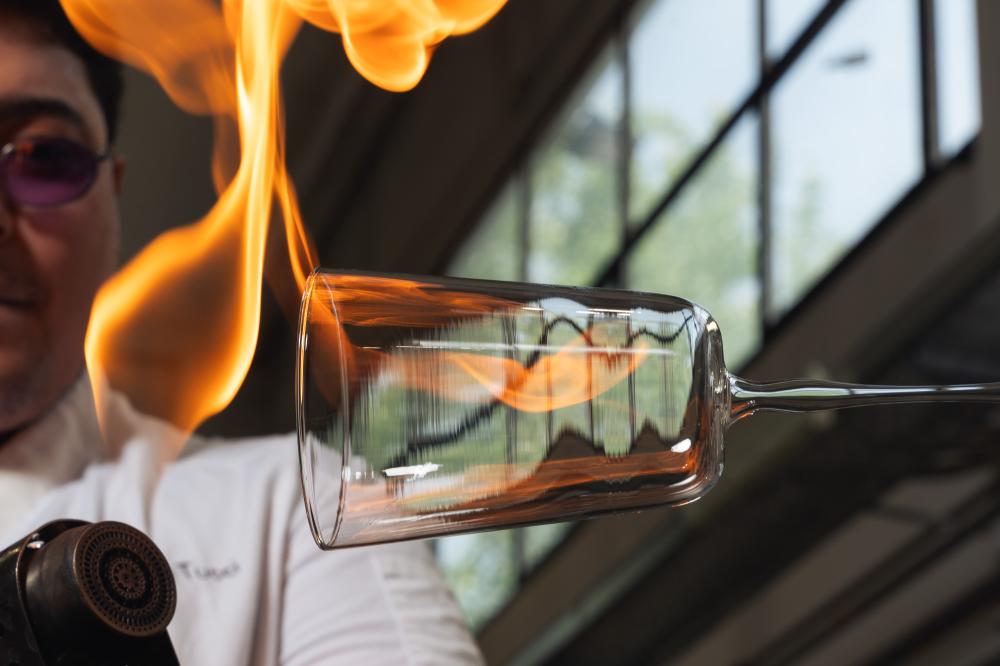
The creation of a borosilicate glass lamp begins with lampworking.
Using burners that exceed 1,400°C, the glass is heated until it reaches its optimal working state and is then shaped entirely by hand. This technique requires years of experience and a thorough understanding of how the material behaves.
Fire, air, and movement work together in delicate balance. Every gesture influences the form, thickness, and internal stress distribution of the glass. It is a process that combines technical precision with artisanal craftsmanship.
This is also where one of the most distinctive qualities of Cangini & Tucci production emerges: every piece features subtle variations that reflect the handcrafted process, making each lamp truly unique.
Our in-house borosilicate glass production allows us to manage bespoke requests with exceptional flexibility while maintaining direct quality control throughout every stage of manufacturing.
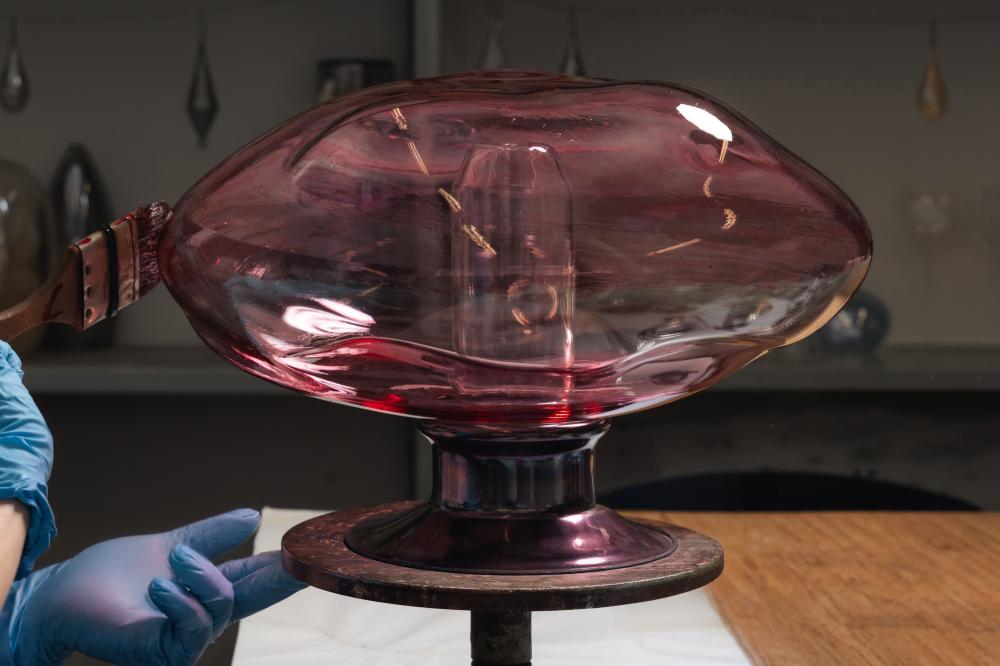
A key element of every custom-made project is the decorative process.
Gold-based lusters are developed in-house and applied by brush or airbrush to create refined gradients, reflections, and finishes that expand the expressive possibilities of light.
At the same time, the wide selection of glass colors and metal finishes allows every composition to be tailored to the architectural language of the space. These finishes are far more than aesthetic details: they interact with the light source, influencing the way light is perceived and creating effects that range from delicate transparency to rich, vibrant surfaces.
This approach enables Cangini & Tucci to offer a high level of customization, developing lighting solutions perfectly suited to residential, contract, and hospitality projects.
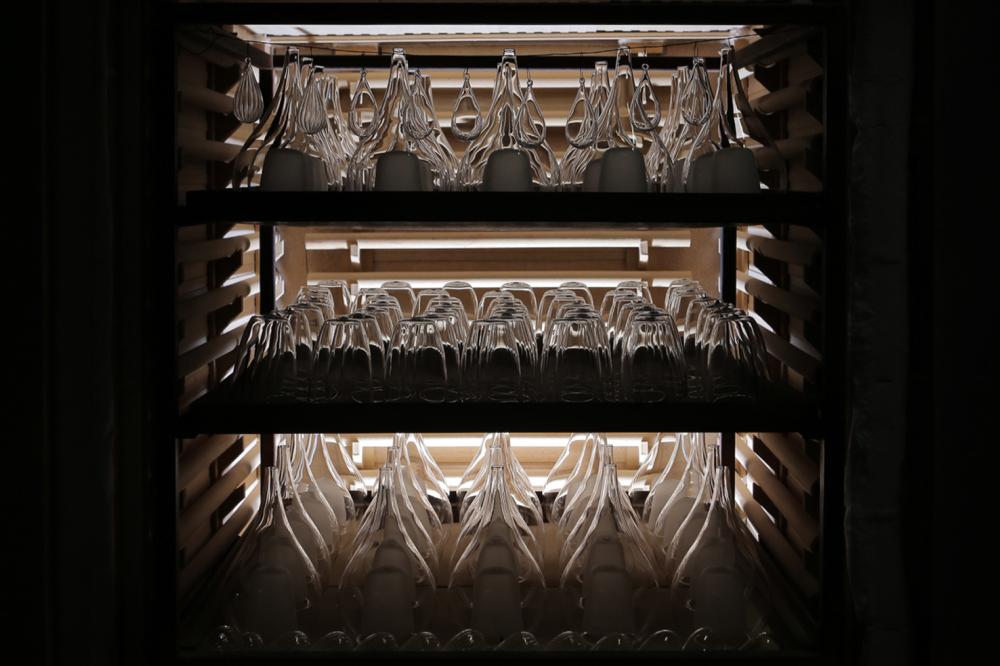
Kiln firing is an essential step in fixing pigments and stabilizing the decorative finishes applied to borosilicate glass lamps. The glass is exposed to carefully controlled temperatures, allowing the pigments to fuse permanently with the surface. This process ensures long-lasting color stability, brilliance, and durability, preserving both the beauty and performance of every piece over time.
The quality of light depends on much more than glass alone. The lighting component is also the result of meticulous technical research. Cangini & Tucci lamps feature LED modules developed and assembled in Italy, incorporating Nichia technology with a typical CRI of 95. This ensures materials, surfaces, and finishes are rendered with exceptional color accuracy, creating interiors that feel more natural, comfortable, and authentic.
Light therefore becomes more than illumination: it is a design tool that enhances architecture and enriches the spatial experience.
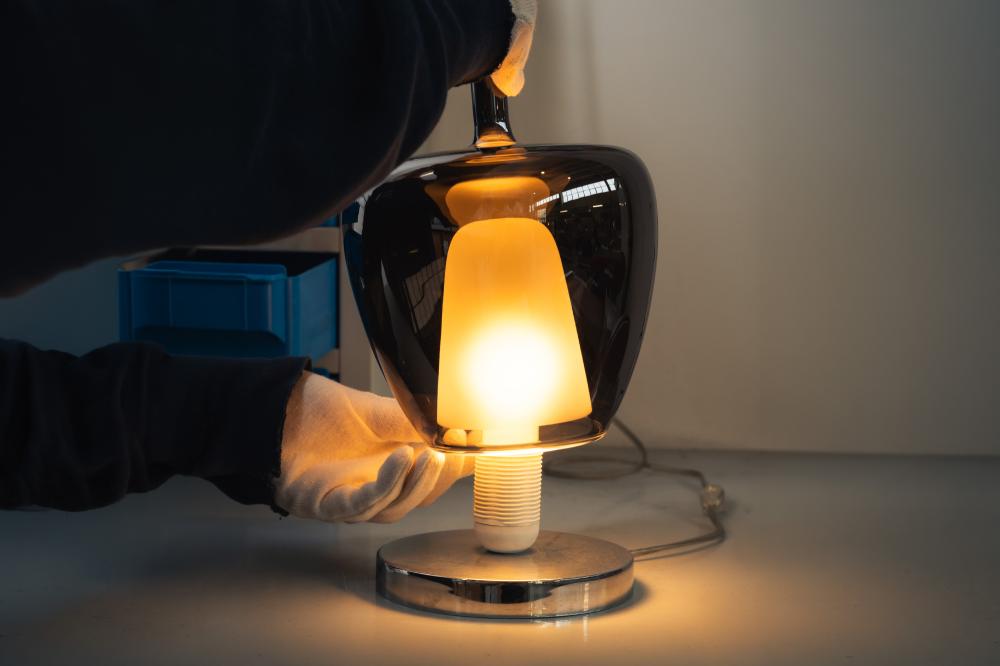
Every stage of production is monitored through rigorous quality control, and each lamp undergoes a final inspection before leaving the factory.
Aesthetic details, finish consistency, electrical performance, and overall product quality are carefully verified.
This final step completes the manufacturing process and ensures that every creation meets the quality standards that define the Cangini & Tucci brand.
Creating a borosilicate glass lamp requires the integration of multiple disciplines: glassmaking, materials research, LED technology, quality control, and lighting design.
It is at the intersection of these elements that the identity of Cangini & Tucci takes shape.
A process in which technical complexity becomes design value, and every lamp tells a story of experience, research, and passion for light.
Stay updated